

Products
CUSTOMER EXPERIENCE SUITE
A promise you can sell.
A promise you can keep.
Improve conversion and retention by showing exact delivery dates that are modeled by the same platform executing your shipments.

Apex&co

ShoesTrail
Apex Trail 2
$128
Size
7
8
9
10
unisex
Arrives in 5–9 business days
Arrives Thursday, July 16
Add to Cart
Checking availability
Promise confirmed
Arrives July 16$7.42
Arrives July 16$7.88
Arrives July 16$11.20
THE OPPORTUNITY
Use your data to offer more accurate dates that convert.
The ecommerce team knows that a concrete data will convert more effectively, but operations team has different margin and on-time-delivery incentives. When the promise and the shipment run on different systems, the only safe compromise is a range wide enough to absorb any failure.
“Arrives in 5–9 business days” is almost never wrong. It also rarely wins a cart.
Until now, the date on the website and the decisions in the warehouse have never shared a brain. Shipium changes that.
Until now, the date on the website and the decisions in the warehouse have never shared a brain. Shipium changes that.

Arrives Thursday, July 16

Delivered
Converts and holds
SHIPIUM CUSTOMER EXPERIENCE SUITE
One promise, carried from cart to doorstep.
Customer Experience Suite solutions share a common thread: the date your customer sees is the date your network is instructed to hit, and the date your tracking provides updates against.
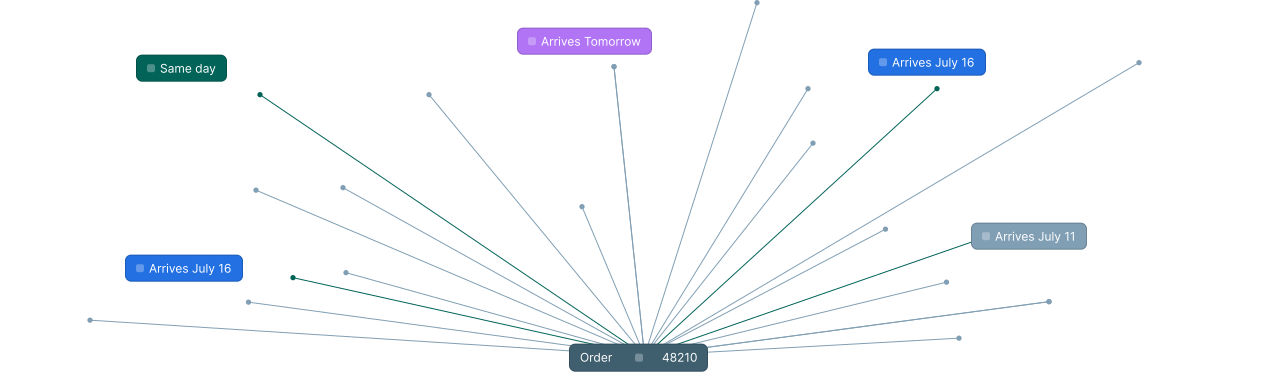
Make a promise
Exact dates that convert
Put an exact date on the product page and at checkout, not a range or guess. Dates are modeled from ML-powered transit predictions, tailored to the scenario: VIP customers, peak season, split shipments, or one consolidated date across every SKU in the cart.
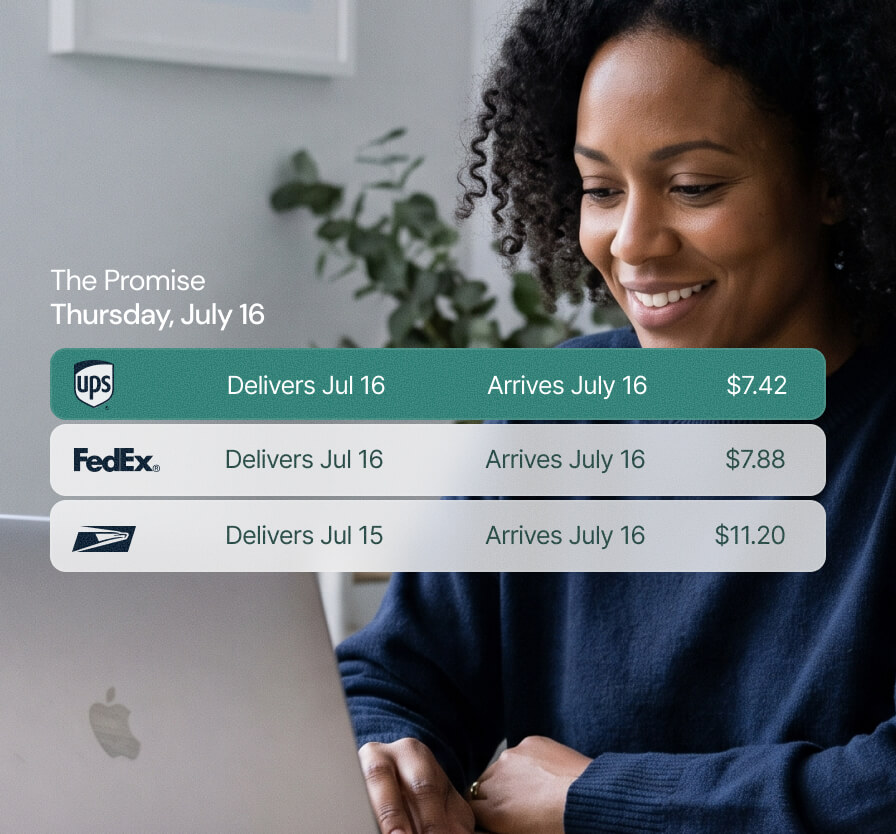
Keep the promise
The promise is an instruction, not a suggestion
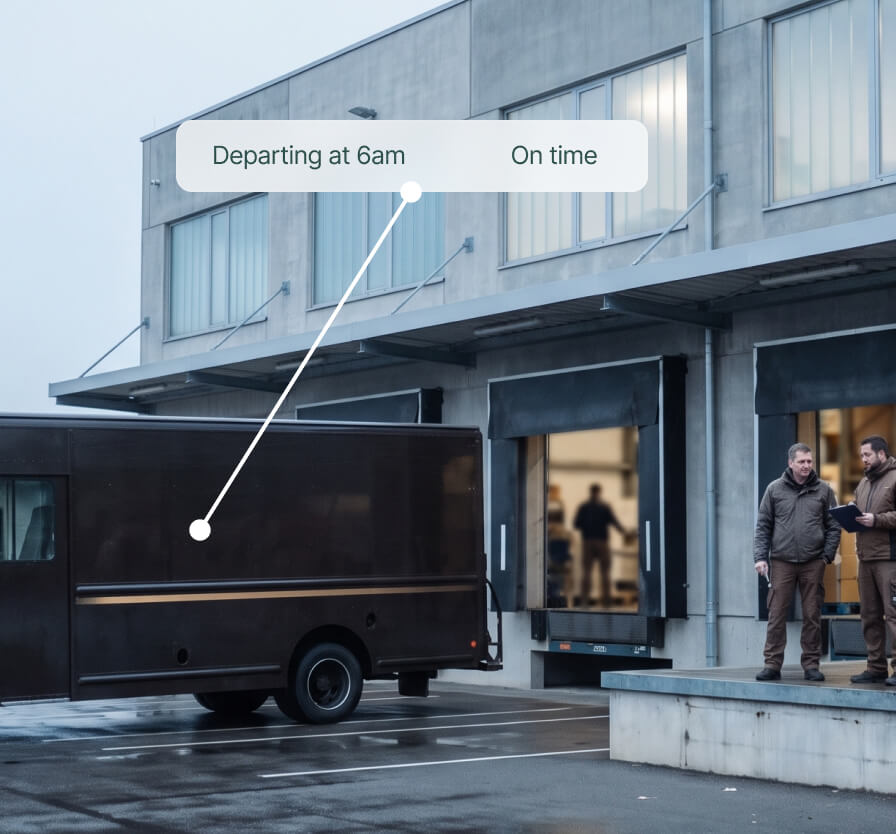
The date you display constrains carrier selection. When the shipment is rated, only options that hit the promise are in play. Keeping your word is how the network is configured to behave, not a nice-to-have.
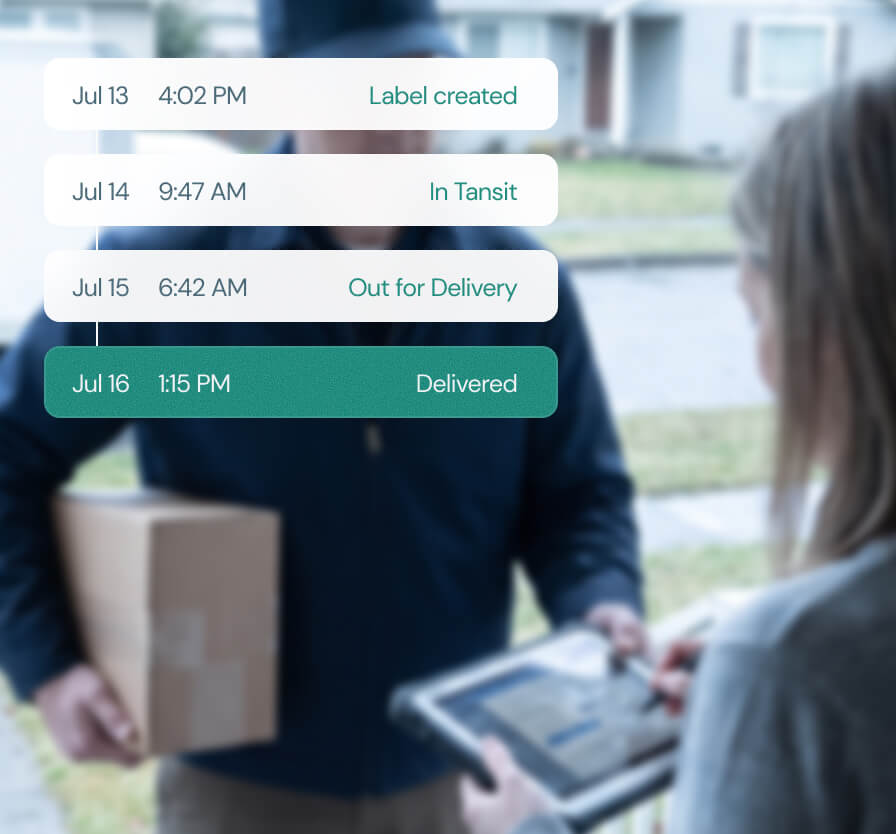
Track it
Tracking from cart to doorstep
Every carrier reports differently. Shipium consolidates tracking events across parcel and LTL carriers into one standardized feed, delivered by webhook to whatever tracking experience you already run. One integration keeps your customers informed, and your support team sane.
DELIVERY PROMISE
Offer exact dates.
Watch conversion follow.
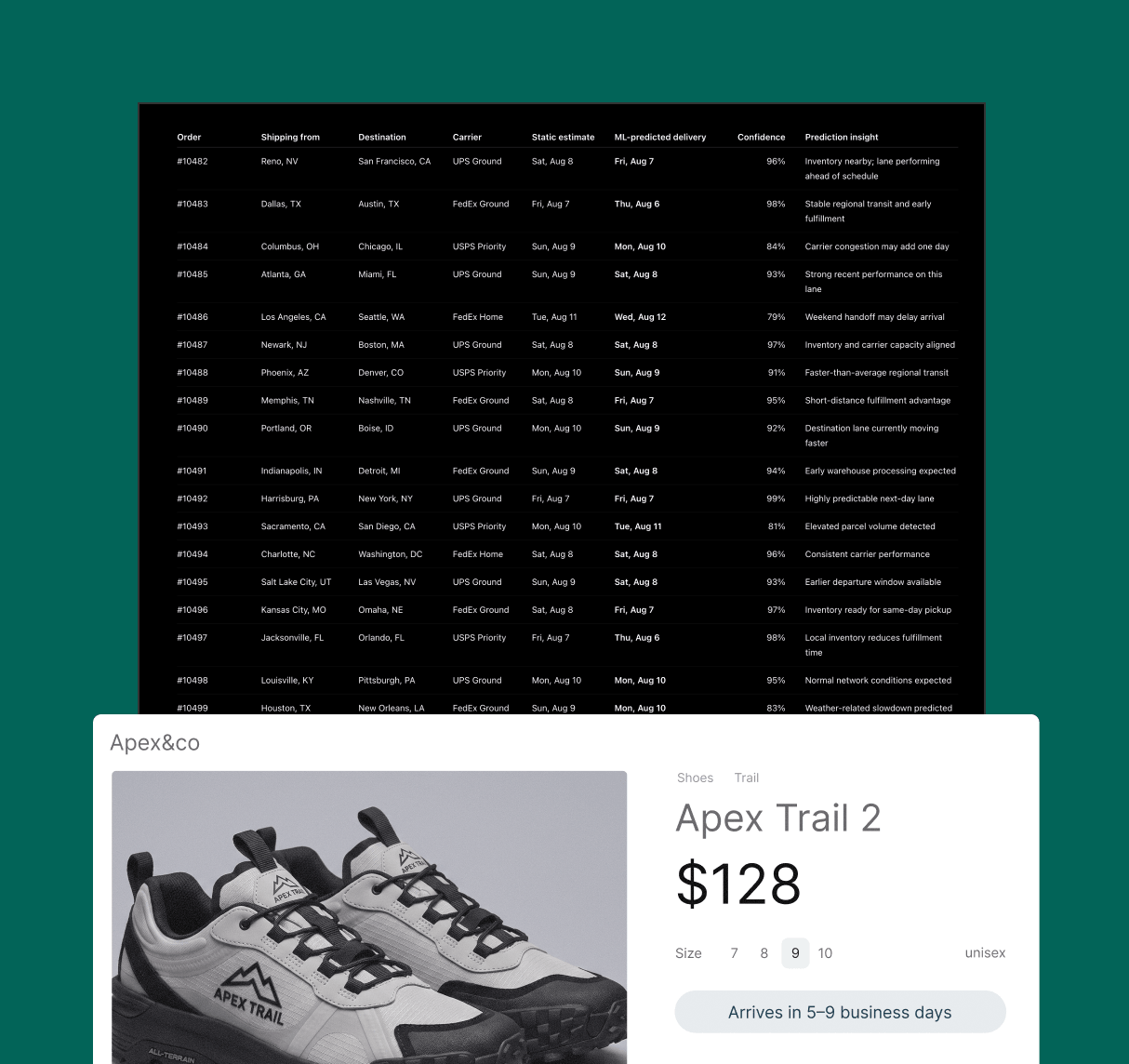
Delivery Promise moves you from static ranges to exact, ML-powered dates while giving you the controls to segment for different customers, channels, and seasons.
ML-Powered EDDs
Dates driven by Shipium's dynamic time-in-transit predictions, returned in with sub-second response.
Promise rule configurations
Create and manage rulesets for advanced strategies, such as different promises for VIP customers, specific channels, or peak season.
Customizable date displays
Break out dates by SKU, origin, or availability — or present one consolidated date for the whole order.
Inventory availability feeds
Integrations with leading OMS and WMS systems pull inventory position from your host systems, so dates reflect what you can actually ship.
Full experience control
A date returned by API. Your front end, your design system, your experience built around it.
Delivery Date Enhancement
Improve the accuracy of existing delivery promises by replacing static carrier defaults with Shipium’s ML transit times in your OMS.
DELIVERY DATE ENHANCEMENT
Already showing dates through your OMS?
Keep your front end exactly as it is. Delivery Date Enhancement replaces the static carrier transit tables behind your existing promise flow with Shipium's ML-powered predictions. Account for inventory position and true time-in-transit with no change to the customer experience. Just more accurate dates your network can hit.
BUILT FOR BOTH SIDES OF THE PROMISE
Ecommerce gets a date that sells, while Operations gets a date that holds.
The promise stops being a negotiation between teams when both are looking at the same date, generated and managed by one system.

For digital &
ecommerce teams
Exact dates on PDPs and at checkout — the strongest form of delivery confidence a shopper can see
Full experience control — a date via API, your front end around it
Date displays tailored to the cart: per-SKU, per-origin, or one consolidated date

For supply chain &
transportation teams
Promises constrain carrier selection — the network is rated and routed to the date shown
Dates can account for both inventory and transit data
Customer-specific carrier mixes and rulesets are guardrails you define, not a black box
Shipium Modeling
Dates modeled by how your network actually operates.
Shipium's transit predictions are trained on historical and platform-wide shipping data, and account for the variability that static carrier tables ignore.

40%
In 40% of cases, Shipium's models predict faster transit than the carrier's published SLA.
That's speed your network already delivers. Most shippers just never show it to the customer.
Shipment Tracking
Every carrier. One feed.
Your preferred interface.
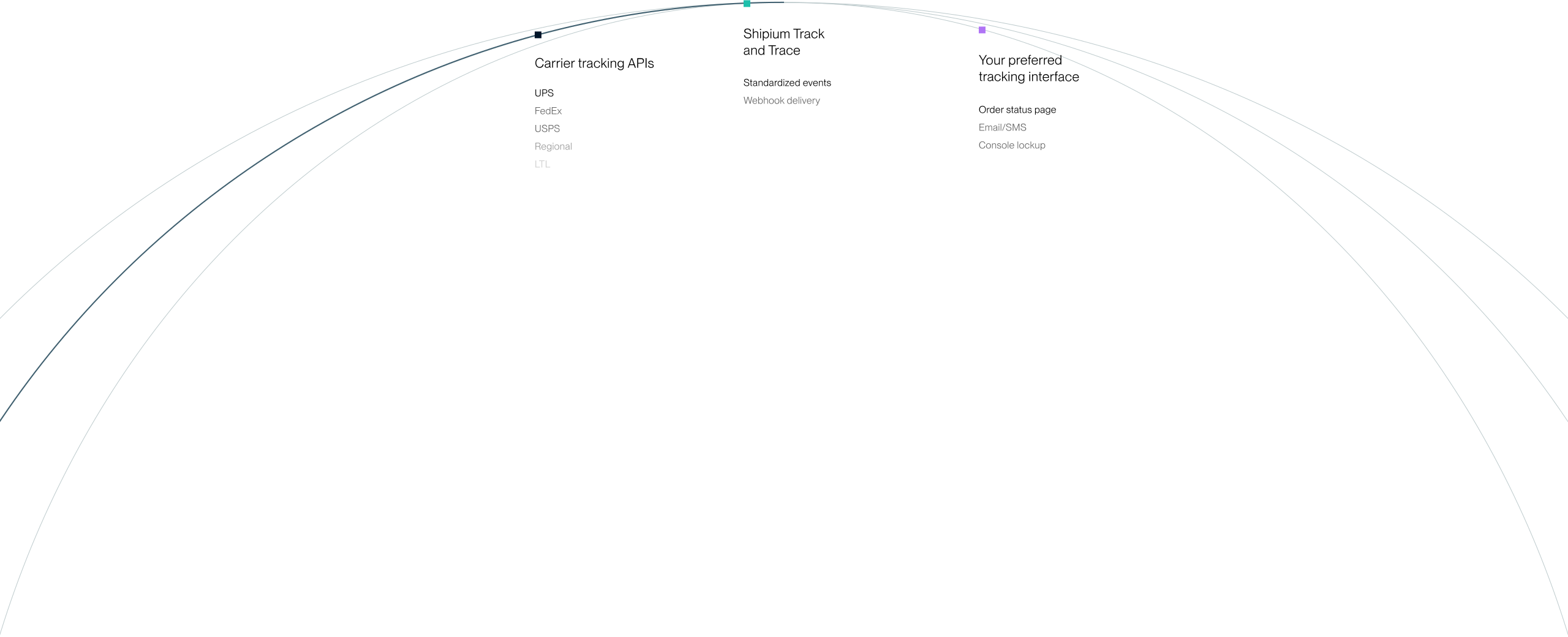
Carriers report tracking events in a range of formats and cadences. Shipium consolidates them into one standardized feed you retrieve by webhook, and provides a browser-based UI for shipment status lookup.
Consolidate and manage updates
One integration replaces carrier-by-carrier tracking builds. Standardized event formats, webhook delivery, and status lookup in the Shipium console.
Turn tracking into leverage
Carrier performance data informs volume allocation and contract negotiations, surfaces inefficient routes and poor origin selection, and feeds predictive analytics that forecast future performance and costs.