


The path to improved experiences, optimization, and automation
Turn your supply chain into a strategic value driver by adopting a new operating model meant for the modern age.
The Old Ways are Costing You
The Problem with Supply Chains Today
Companies want their supply chains to be a strategic engine to their growth, but they are burdened with legacy tech and processes holding them back.
Customers expect more
From consumers to corporations, buyers have more options than ever before and expect more from sellers in the modern age. If you can't compete on convienence, you will slow growth and lose customers.
Complexity is out of control
The pace of new technology has ironically made supply chains more fragile. The enemy is complexity, which is why operators often feel their supply chain is a Leviathan, unable to understand or control it.
The Classic Operating Model Doesn't Help
Organizations today have tried to change by using data, but they are stuck in a world with little insights and even less action.
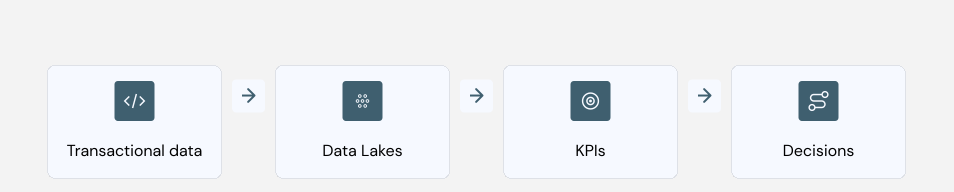
Reporting fits the specific user. There isn't anything inherently wrong with dashboards and reports, it doesn't give insights to tough questions.
What are you actually trying to accomplish with your supply chain?
What is the goal or objective?
Does your supply chain actually improve the customer experience or is it purely a cost sink?
How do you resolve competing priorities between different organizations?
Where should we sit along the speed-cost spectrum?
Do Supply Chains Right
That's Why We Built Shipium
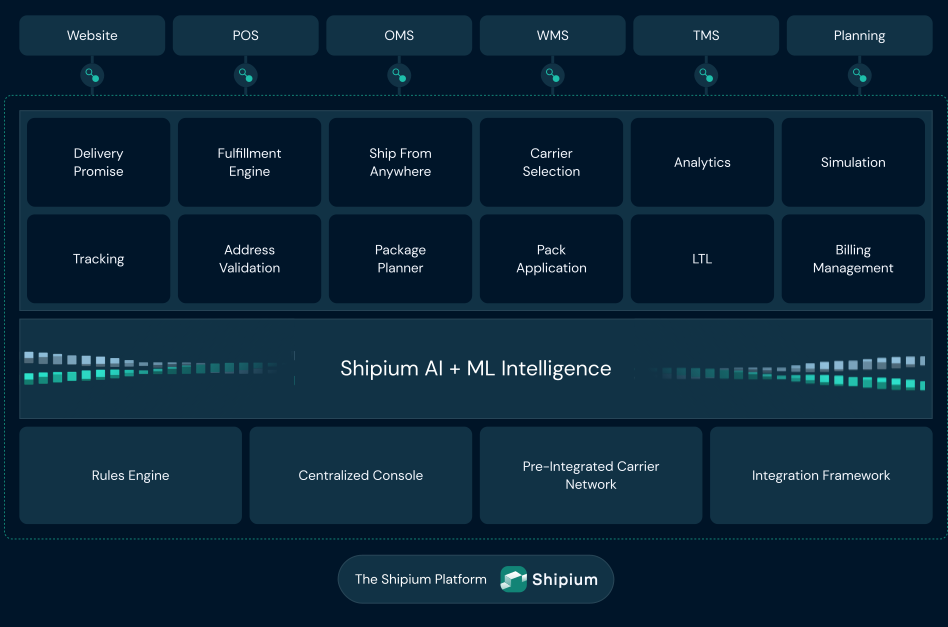
We provide a centralized platform for optimizing the logistics parts of a modern supply chain that we think of as a Shipping Operating System.
End-to-End Shipping Platform
On top of the platform are a collection of solutions that coordinate workflows, teams, and data across your existing technical systems to help turn shipping into a strategic value driver for your business.
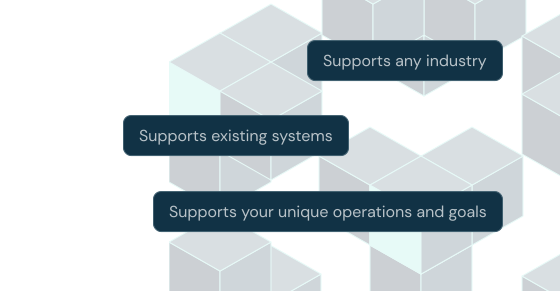
Coordination and Control
Ensure that upstream decisions influence downstream outcomes. Make a promise at checkout, then keep the promise during fulfillment.
Data Leverage
Deploy your data paired with our unique platform-wide data through a collection of models powering real world AI + ML being used by customers today.
Manage Trade Offs
Answer the hard questions that drive the business forward by understanding and then taking action on difficult trade off decisions across the company.
Pillar 1
Customer Focus
Supply chains are built from the ground up to serve customers
Making Promises You Can Keep
Competing for customers requires you to make competitive promises. It's what creates healthy brands. The supply chain is responsible for a major portion of the purchase experience, from retailers competing for consumers to B2B firms competing for corporate budgets.
What does it mean to make a promise you can keep?
Product availability
The supply chain is procuring goods to make available to customers when they need it, and gives the transparency of that availability.
Delivery transparency
Customers will buy more if they know when they will get it. Providing accurate estimated delivery dates is essential.
Optionality
Sometimes customers want to schedule delivery, organize a pickup, or choose between faster or cheaper options.
Product quality
Suppliers are a critical part of products not failing on their brand promise.
Returns experience
Customers want a convenient relationship with their vendors and brands.
The principles of a customer-focused supply chain
Push vs Pull Thinking
Work backwards from delivery to identify the right workflows to maximize customer experience and minimize costs

Keep Your Promises
Customer sentiment is always higher when you follow through, which requires tying frontend and backend systems together
Constantly Evaluate Opportunity
Marketing must merchandize the innovations of Operations. If you innovated in a way that impacts customers, take credit!
End-to-End Visibility
It's hard to optimize downstream outcomes, like cheaper and faster shipping, without coordinating upstream decisions
Pillar 2
Continuous Optimization
Superior experiences on the frontend requires backend machinery to help you keep the promises that you made
Bending the Cost Curve with Shipium
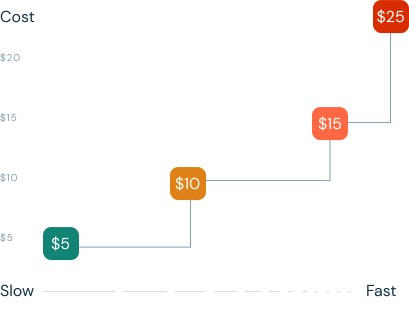
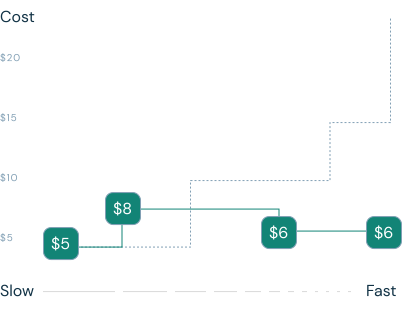
Most companies still view supply chain costs as fixed in stone. The best example is the trade offs between delivery speed and shipping cost that every customer-focused business has to make.
Old World
As speed gets faster, costs go up. Finance and Operations prioritize shipping as cheaply as possible resulting in a worse experience, whereas Marketing wants to deliver as fast as possible at any cost.
Delivery transparency
Improve experience while bending the cost curve. Understanding trade offs order-by-order results in ways to reduce shipping costs while still competing on delivery speed and accuracy. Everyone is happy.
We Power Continuous Optimization
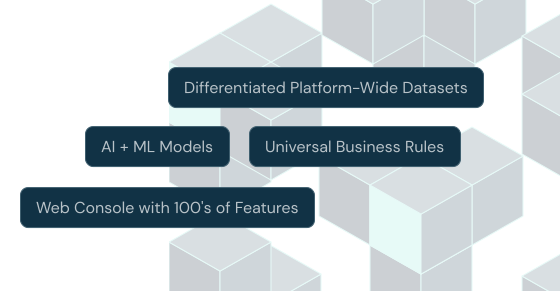
Core platform components drive every solution
The three reasons companies struggle to optimize

Competing Org Incentives
Different parts of the org work towards KPIs that negatively impact other teams, resulting in poor global outcomes for the company. Poor alignment is easy to spot if incentives are misaligned.
Coming Soon
Deterministic Thinking on Probabilistic Problems
Most supply chain problems are stochastic in nature, which requires data and modern tools like Machine Learning, yet operators rely on old static rules that crumble under modern complexity.
No Data Leverage
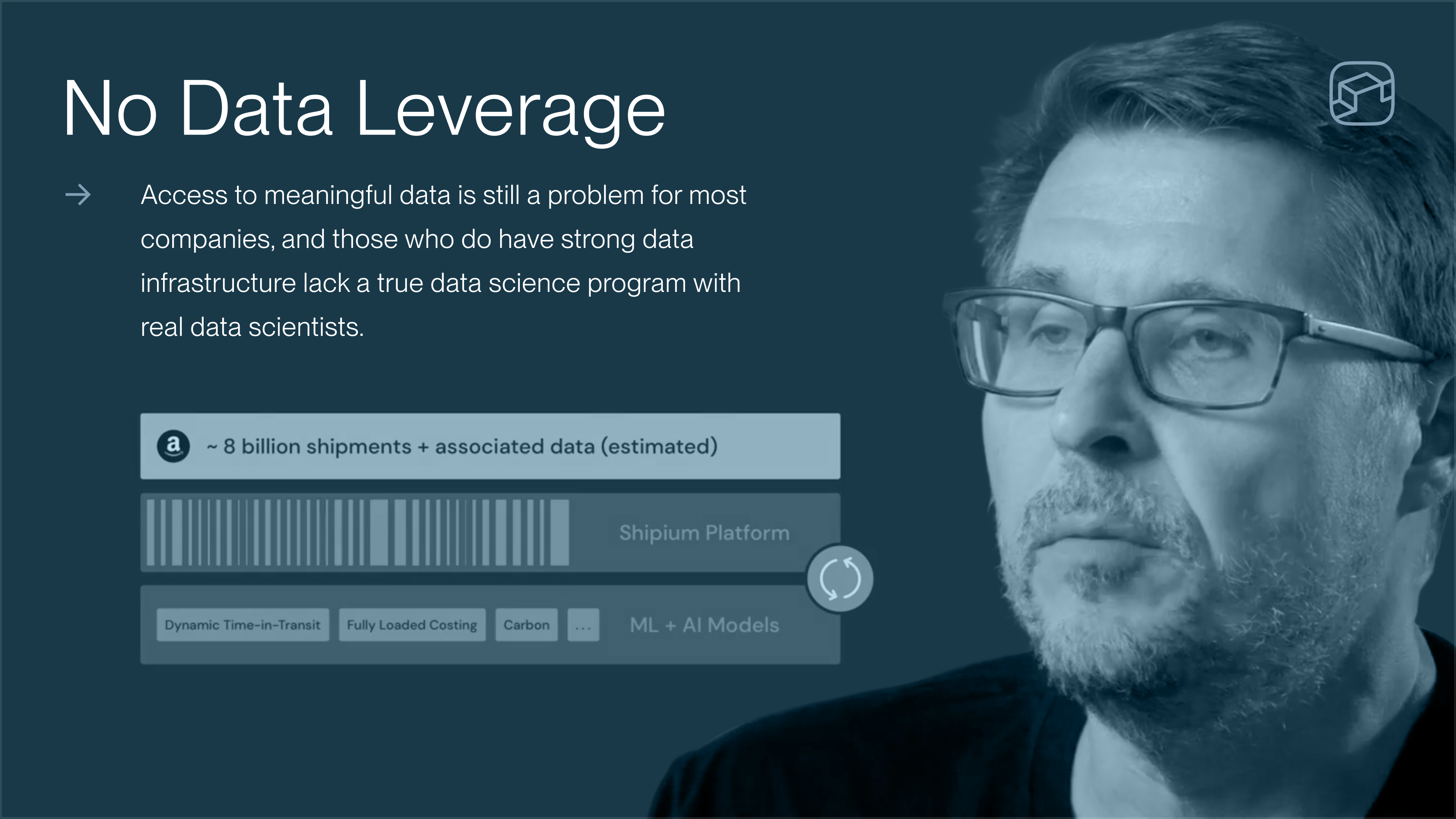
Access to meaningful data is still a problem for most companies, and those who do have strong data infrastructure lack a true data science program with real data scientists.
Pillar 3
Flexible Automation
The keys to profitable scale are found through managing trade offs with automation
The four unlocks of automation with Shipium
Coming Soon
Self-Adjusting Models
The goal of machine learning is to let the machine learn and adjust as conditions and results change. Shipium's platform reacts in real-time.
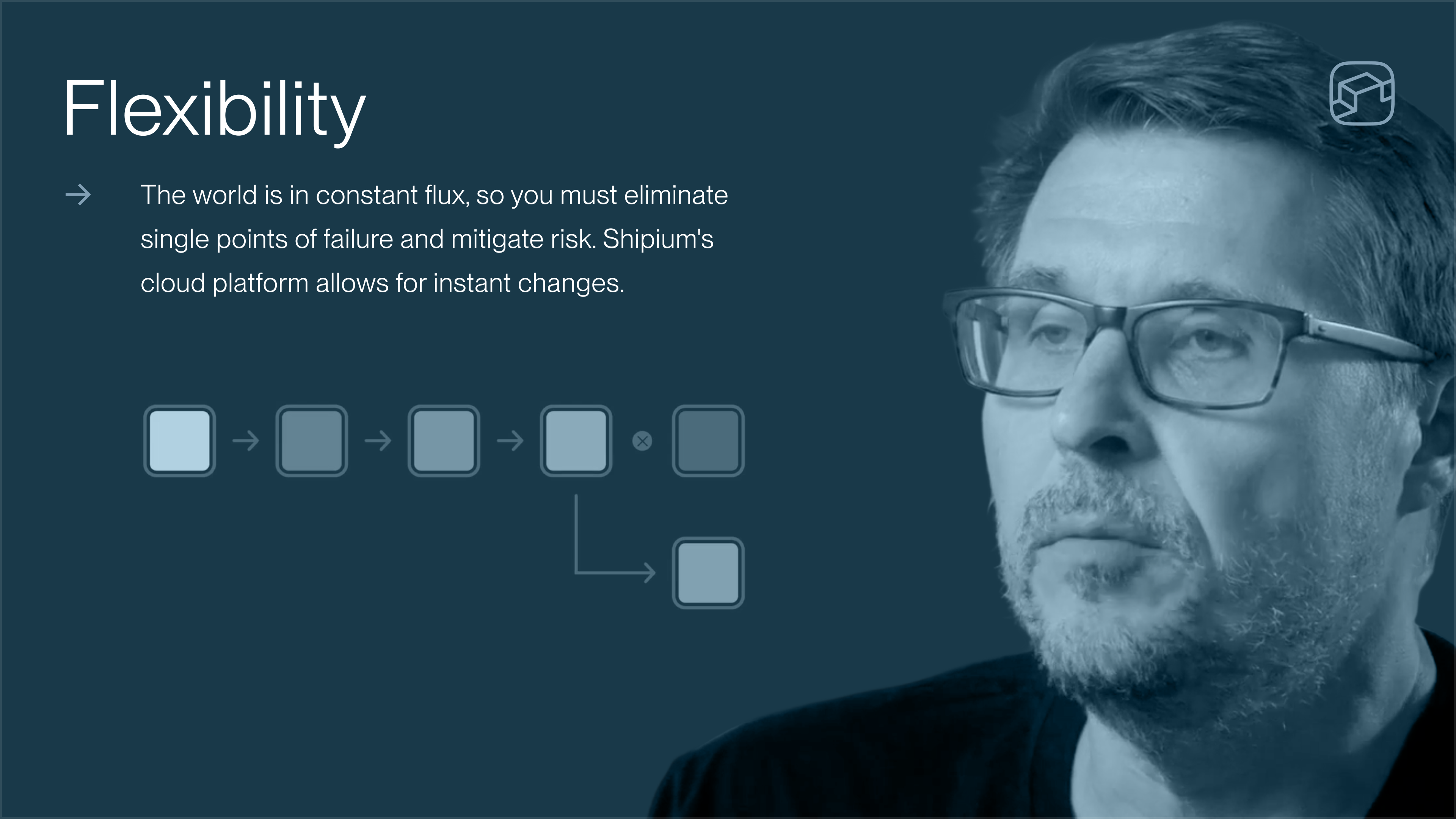
Flexibility
The world is in constant flux, so you must eliminate single points of failure and mitigate risk. Shipium's cloud platform allows for instant changes.
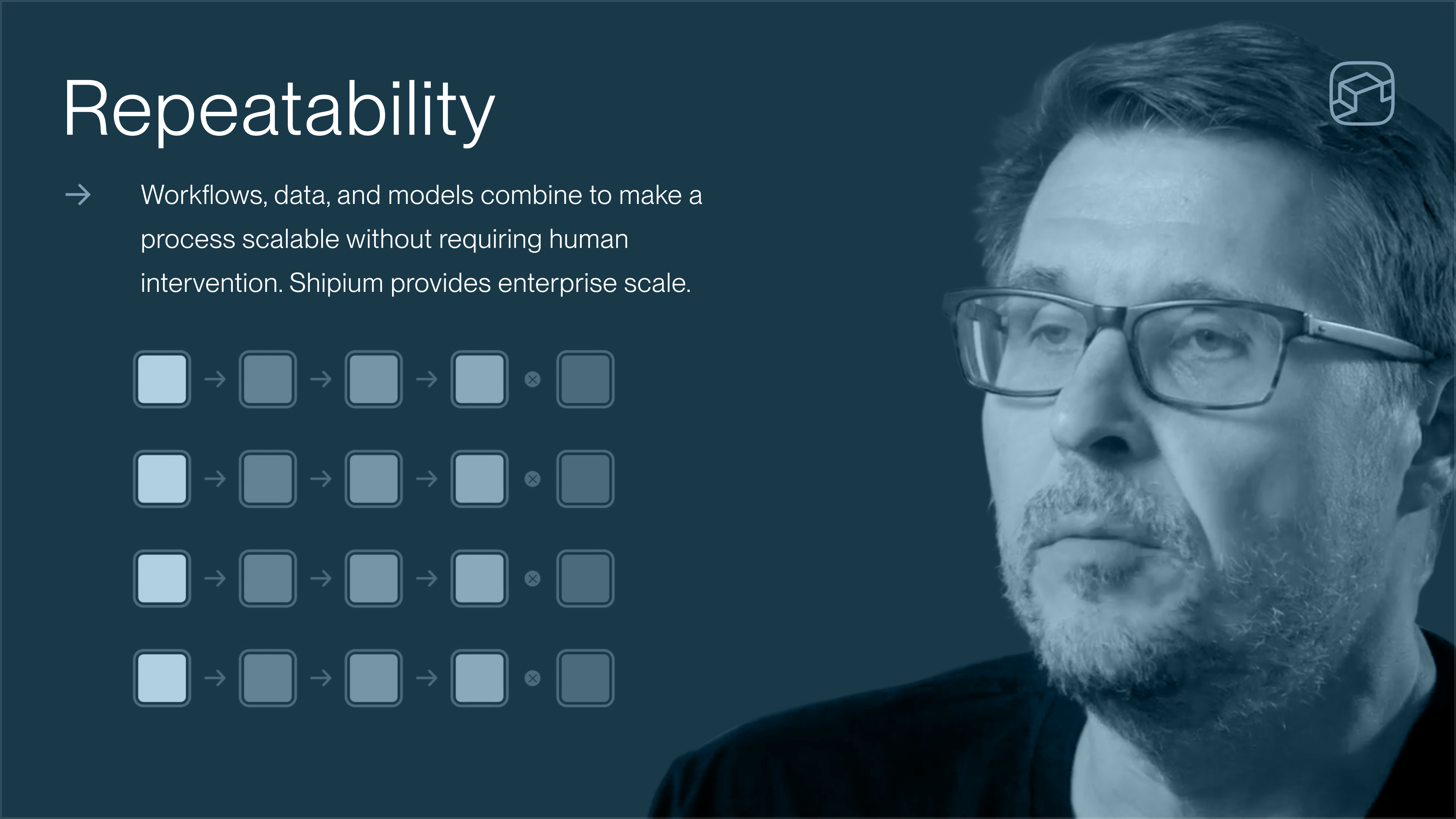
Repeatability
Workflows, data, and models combine to make a process scalable without requiring human intervention. Shipium provides enterprise scale.
Coming Soon
Time for Strategy
Control gives you confidence, and confidence gives you the room to strategically think and plan ahead. Shipium gives you maximum control.
The Modern Operating Model
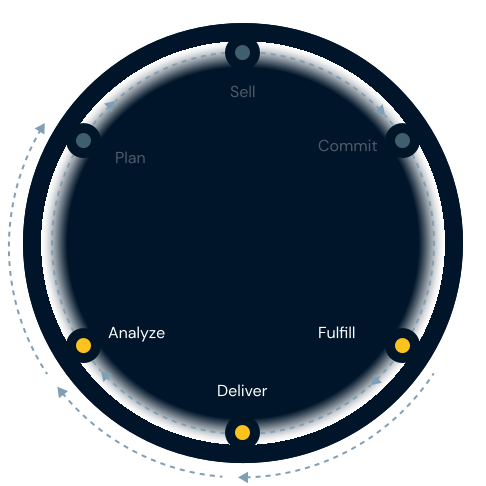
Kickstart a Flywheel of Strategic Growth
Modern supply chains continuously reinvest into new innovations that power more growth and extra cost savings for the company
The four unlocks of automation with Shipium
Connect each part of the business
Answer your most pressing “what-if” questions and make more informed process decisions.
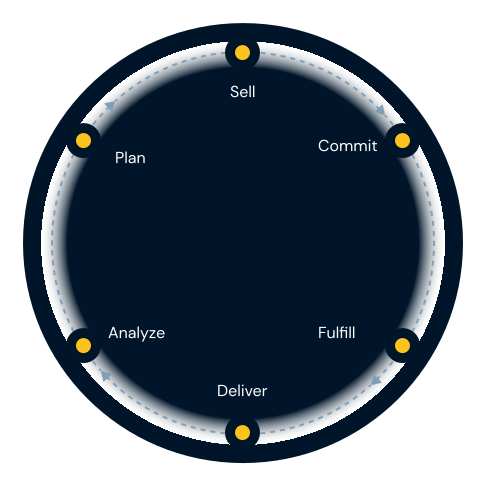
Customer experience powers growth
Frontend improvements to customer experience, like greater product availability or faster and cheaper shipping options, generates more revenue.
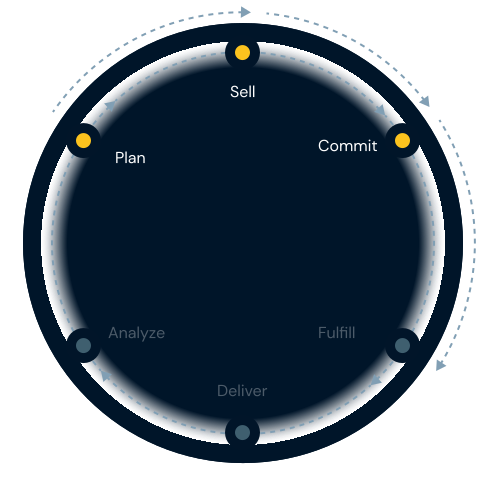
Optimization and automation power cost savings
Backend improvements to technology and operations, like reducing shipping costs and improving automation, generates more profitability.
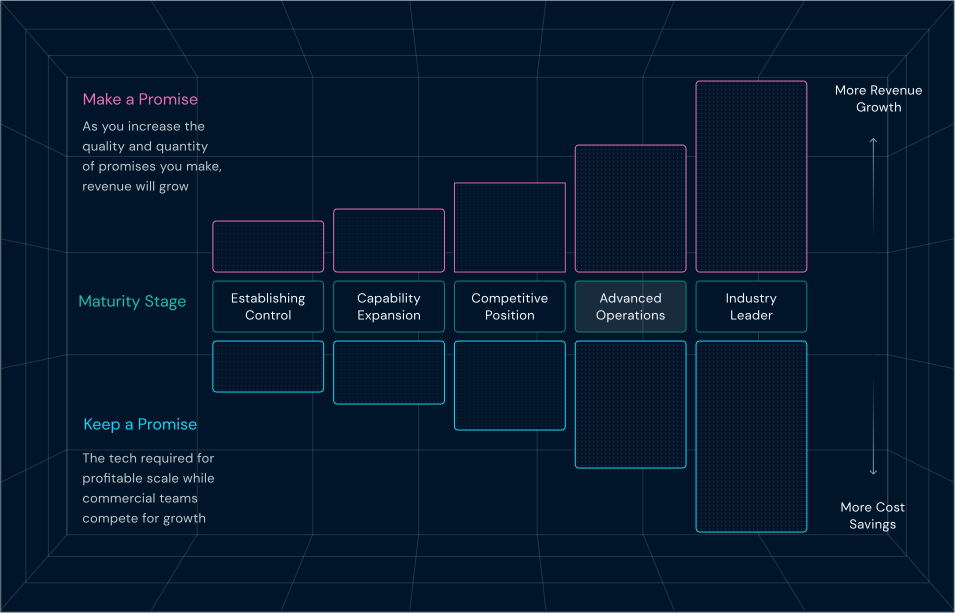
Shipium Maturity Model
Your Map for the Journey Ahead
Every company is on a unique path to modernization, so the Shipium Way thinks of supply chain modernization as a maturity model that meets your business wherever you are. Work with us to identify where you might be, and where you want to go. The Shipium platform will help you get there.
Stage 4
Advanced Operations
Situations
The next level of supply chain innovations are blocked behind usage of truly modern technology, like AI and ML, deployed in a realistic way, combined with butting up against the current physical limits of their network. Most companies haven't yet invested in using these upgrades.
Goals
Companies in this stage tend to make major alterations to their physical network, such as adding more warehouse origins, centralizing omnichannel modes like store fulfillment and dropshippers, or in a B2B setting start to centralize distributors and transportation modes.
The optimizations required to reach maturity at this stage tend to be found through use of real data science, like actionable AI or ML deployed in the field.
The optimizations required to reach maturity at this stage tend to be found through use of real data science, like actionable AI or ML deployed in the field.
Example Initiatives
01
Adding more warehouse fulfillment origins.
02
If a retailer, lighting up store fulfillment in a scaled way.
03
Merging dropshipping with all other operations so that business rules, constraint tradeoffs, and cost optimizations factor in inventory sourcing from dropshippers in the same way as first party inventory.
04
Complex ML-based decisioning, such as forward drain, among many other advanced ideas. What's forward drain? It's the act of projecting inventory levels at all available origins into the future, to anticipate probable drain. For example, shipping from Reno to Denver is $1 cheaper than shipping from New York to Denver. But if Reno's inventory goes to zero, a future order going from New York to L.A. might be $10 more. Forward drain modeling helps model out the understanding that spending $1 more today will save $10 tomorrow.
05
Regular network optimization takes root, such as over night rebalancing. In this scenario, companies look use multiple models to identify SKU rebalancing between origins, and run LTL loads overnight.
06
Order routing enters maximum efficiency by reducing splits through order consolidation. Sophisticated ML modeling can see situations where fulfillment can be delayed in order to consolidate multiple products into a single shipment and still hit a delivery promise date