

For retailers and brands
Make promises you can keep, then keep the promises you make
Shipium gives retailers the intelligence and control they need to win the cart, hit the date, and protect margin.







The order lifecycle, run by Shipium
Get every key decision right from cart to doorstep.
Network-aware ML, not a static carrier table
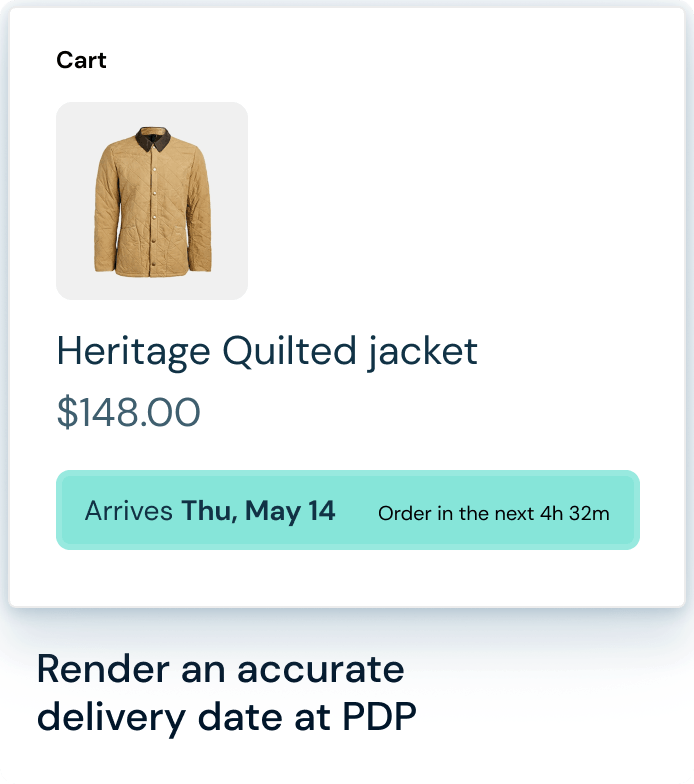
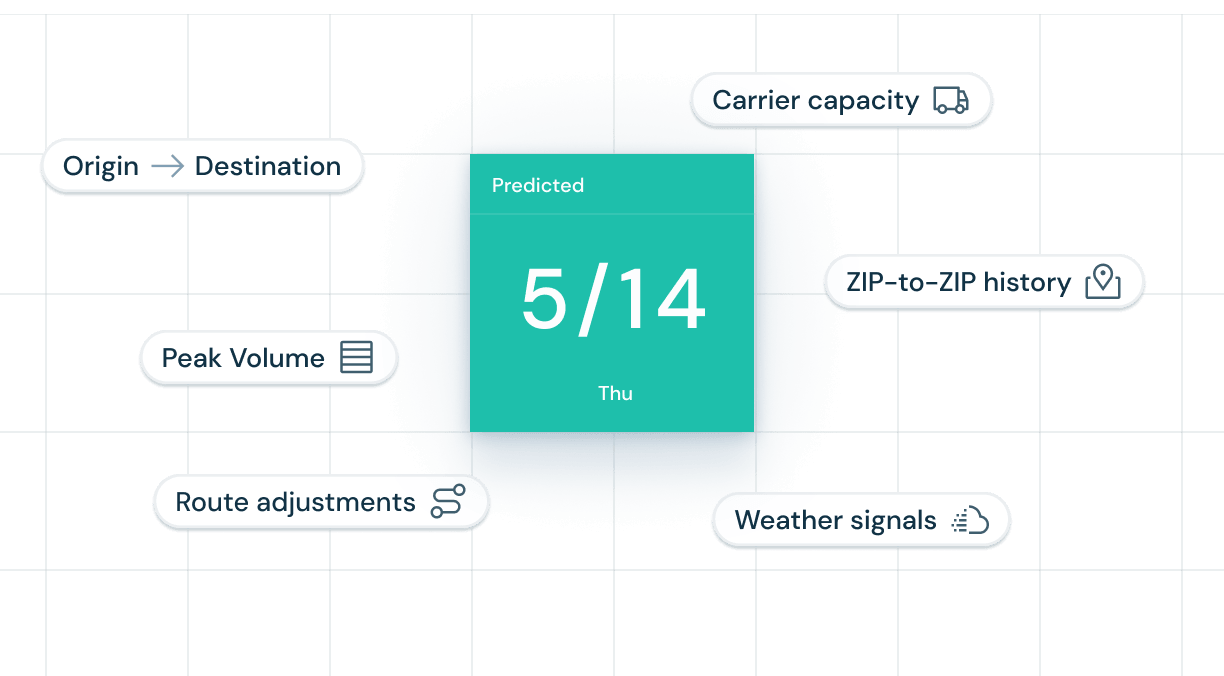
Shipium models transit using your nodes, carrier pickup cutoffs, peak-season volume, weather, ZIP-to-ZIP history, and a range of other factors. Present tighter, more confident dates than your competitors and remain accurate as conditions change.

Segment the promise across every customer.
Show one date to a Gold-tier customer in the Northeast, another to a value-tier shopper in Texas. Tune by region, node, and customer tier without rebuilding your frontend.

Improve existing promise accuracy.
Already offering exact promise dates? Shipium's EDD Enhancement feeds ML transit times to your inventory system (e.g., OMS), enabling you to offer more accurate dates based on both factors.
02
Origin & Inputs
Make the right upstream decisions
Once the order is placed, Shipium picks the optimal fulfillment node, validates the address, and gets the packaging right based on SKU properties. Upstream rate shopping powers smarter origin selection and shipment timing.
Who owns this
Logistics & ops
Store ops
One engine for DCs, stores, and dropship partners
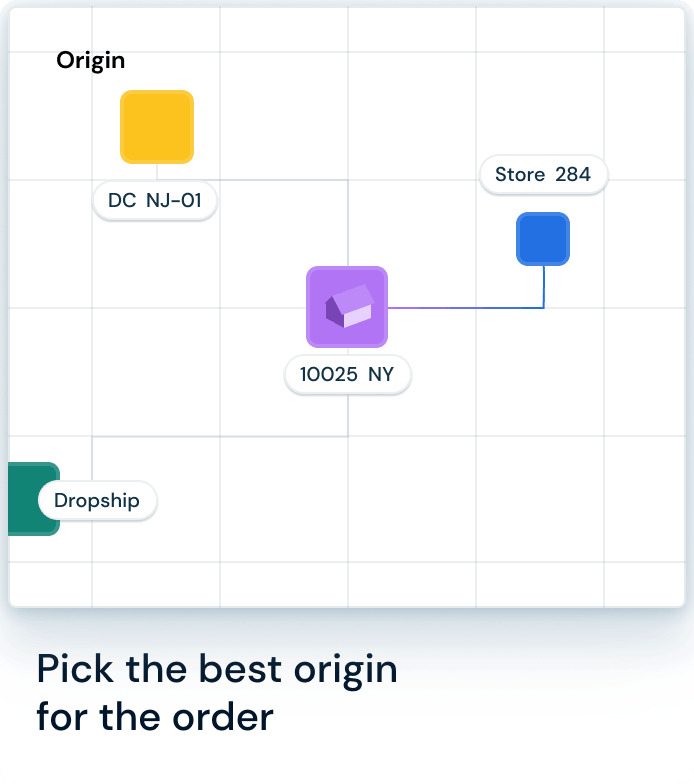
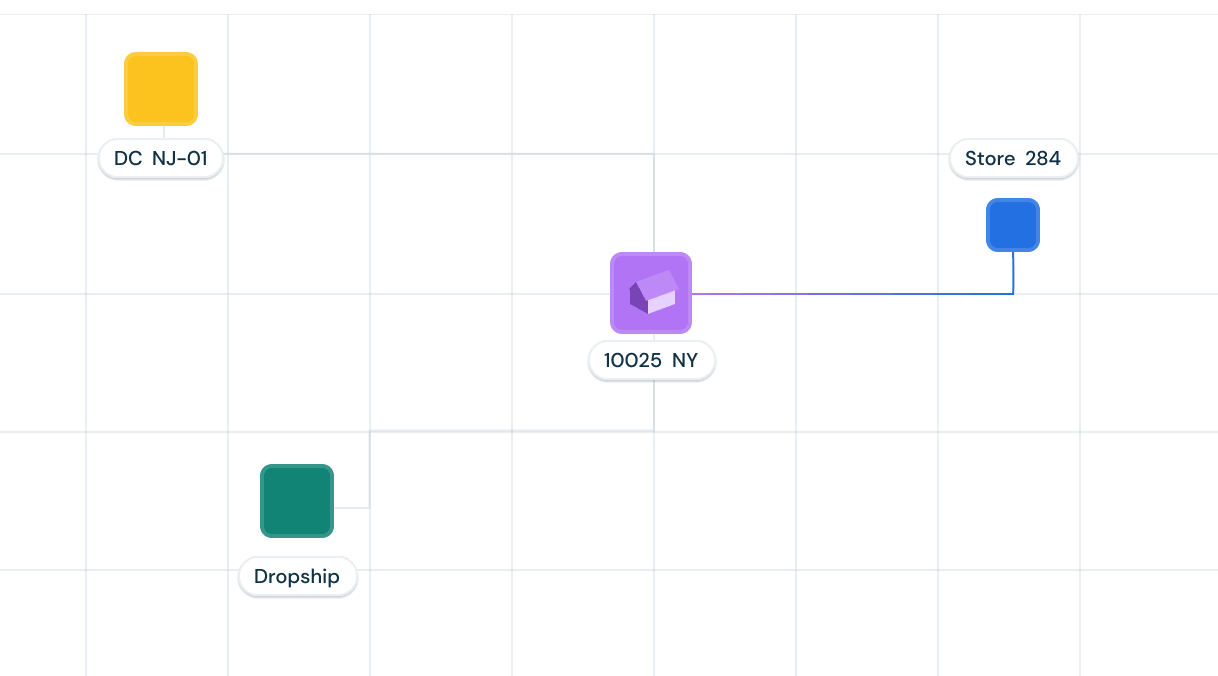
Light up ship-from-store and 3rd-party fulfillment without standing up another shipping stack. Route Optimization treats every node as a candidate and recommends the one that delivers on the promise at the lowest landed cost.
The right origin, timed to the promise
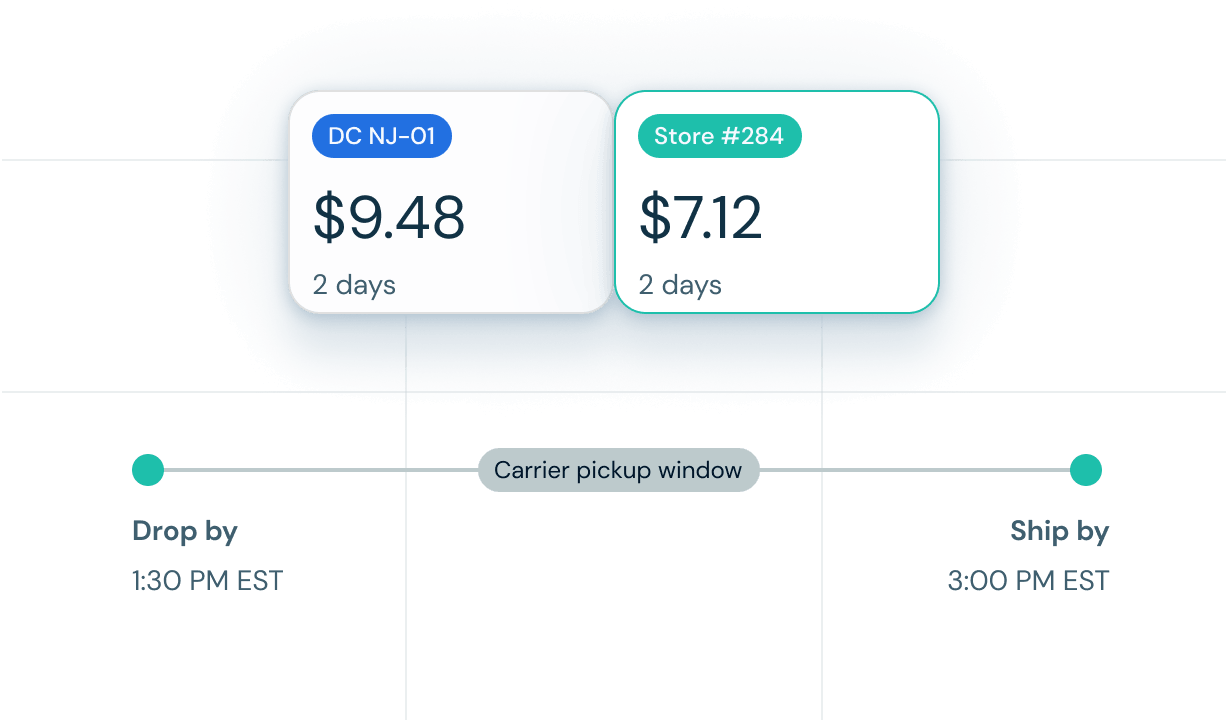
Route Optimization combines real-time inventory with ML transit predictions and fully-loaded cost estimates to pick the right origin for every order. The platform then recommends the right drop-by and ship-by dates to line up with the promise made at checkout.
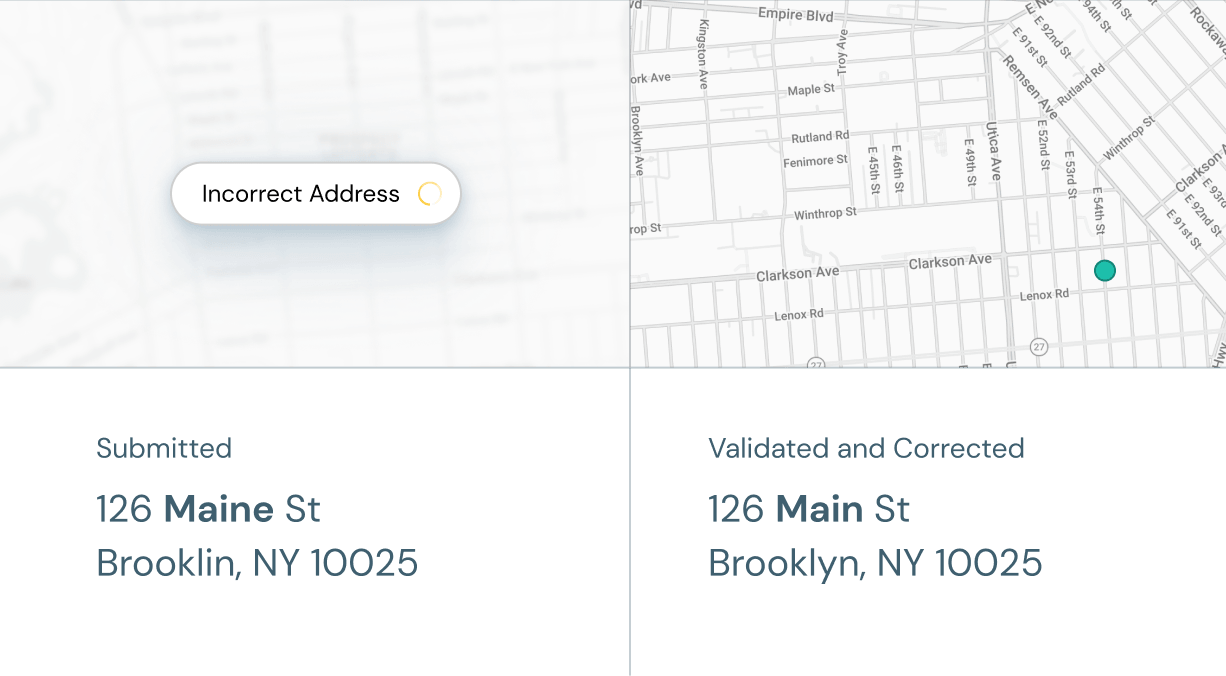
Validate addresses before the label prints
Catch bad addresses before they become correction surcharges, failed deliveries, or return-to-sender fees — all of which add up fast for high-volume retailers.
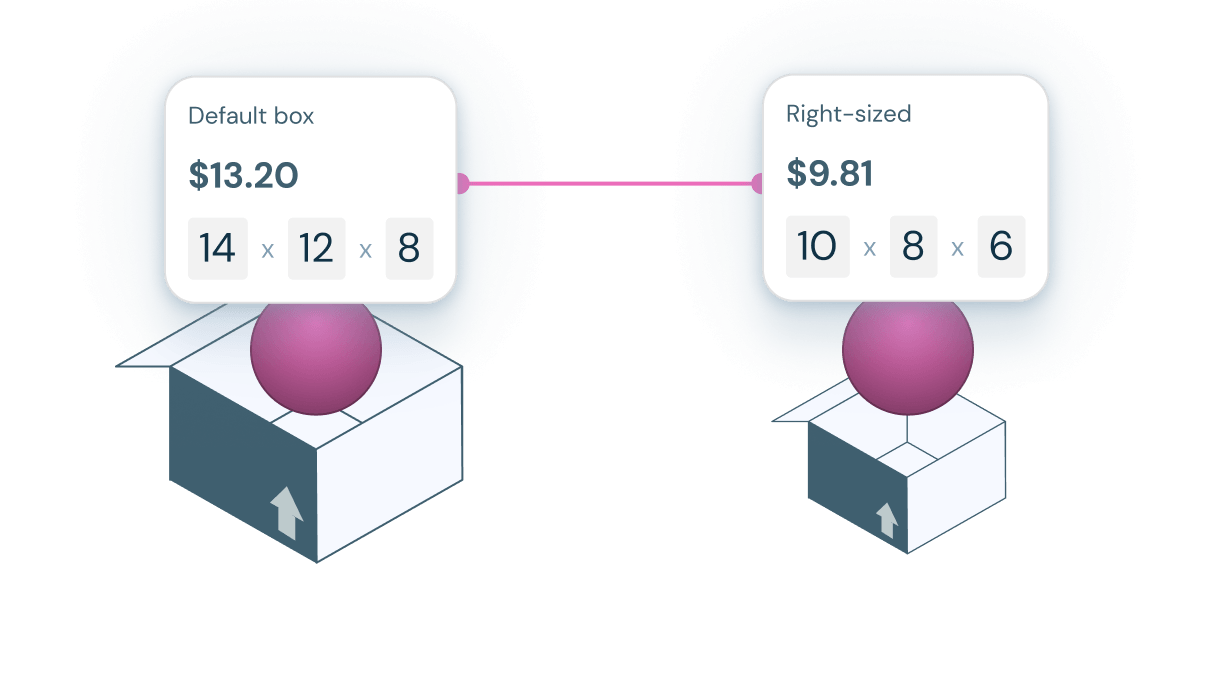
Right boxes help you find the right rates
Packaging Optimization recommends the right box for every cart based on SKU dimensions, composition, and carrier DIM rules. This enables you to cut margin-eroding dimensional weight charges.
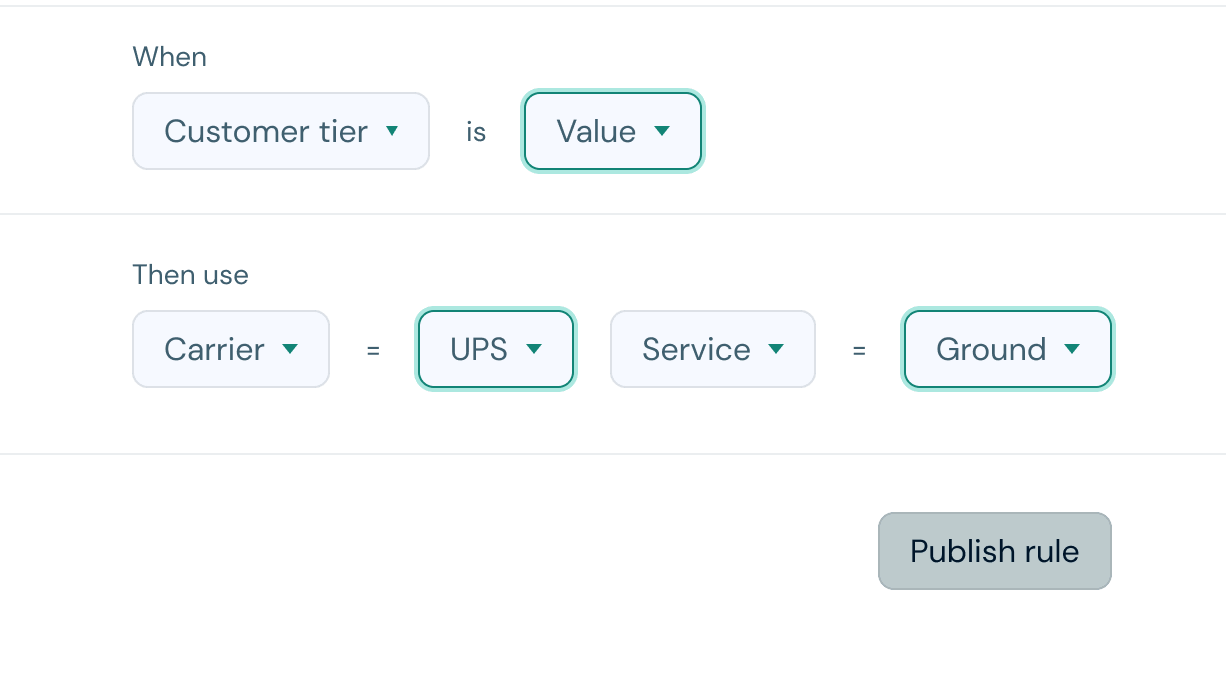
Configure the rules that drive automation
"Don't ship from Store #284 after 2pm." "Prefer the DC for orders over $200." Configure rules in Shipium’s Console UI without services orders, IT queues, and the associated delays.
03
Rating & Execution
Choose the right carrier and service for every shipment.
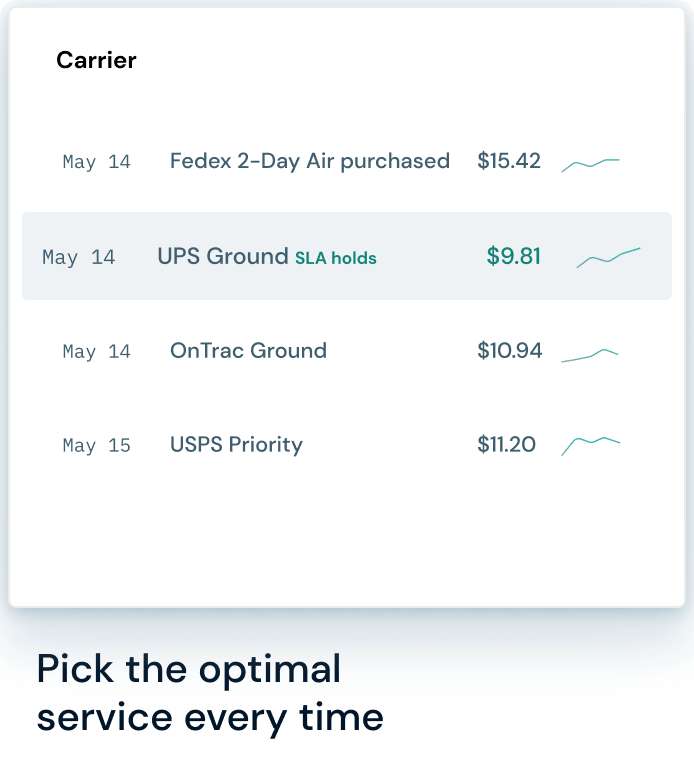
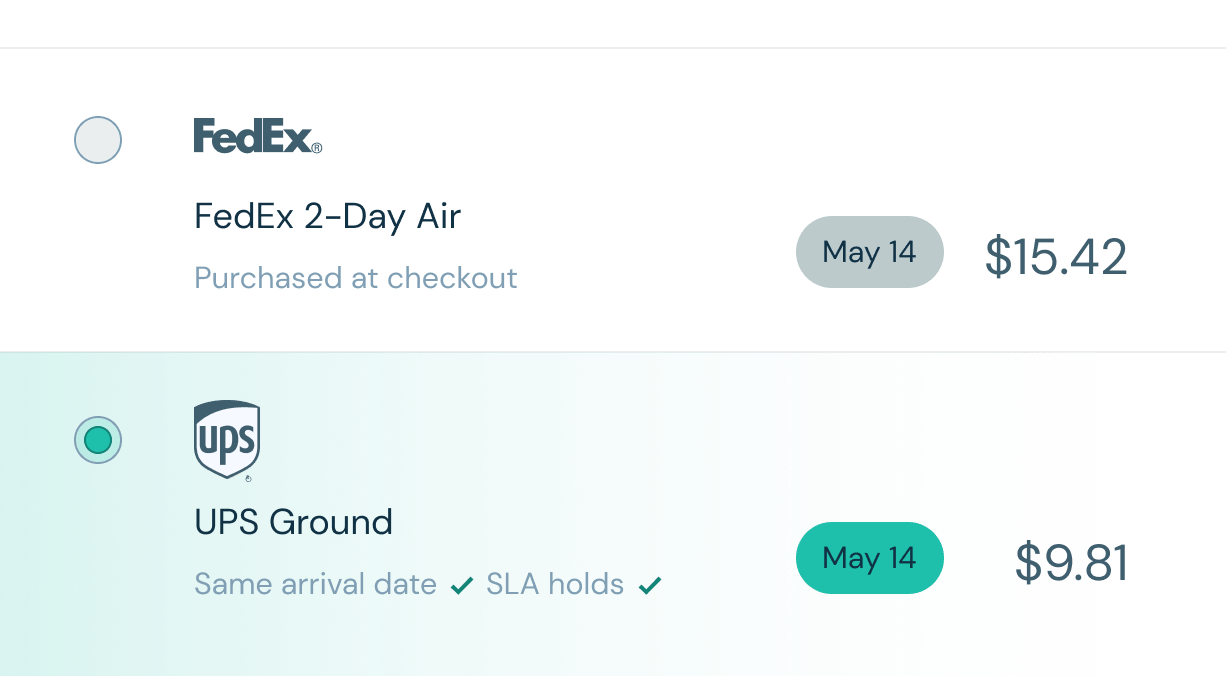
Rating Engine scores every available carrier and service against promise dates, fully-loaded costs, and contractual commitments. Premium services get downgraded to ground whenever SLAs still hold. Volume gets allocated to hit your negotiated commitments. Surcharges and accessorials get priced in before the label prints, not surfaced on next month's invoice.
Who owns this
Logistics & ops
Transportation
Rate shop fully-loaded costs across all carriers
Base rates, fuel, residential, DIM weight, peak surcharges, address corrections are all evaluated at shipment time, across every carrier in your network. Carrier eligibility is verified using package-level details and the date promised to the customer.
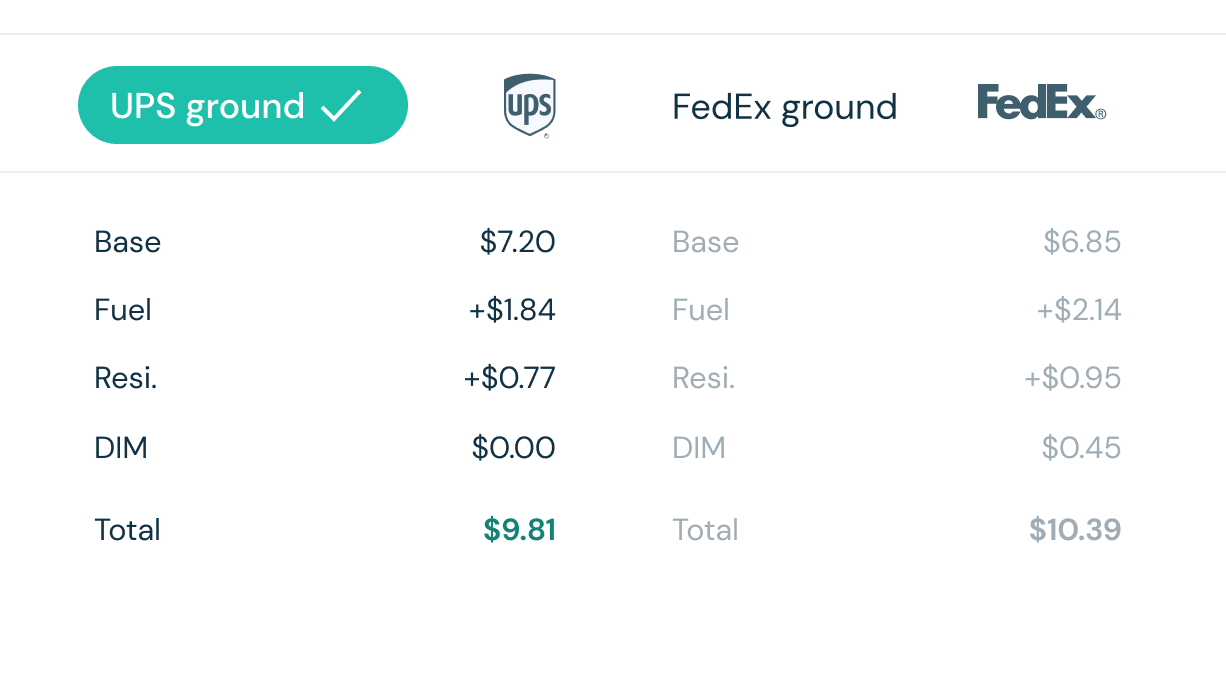
Use more cost-effective service methods whenever possible
Let’s say a shopper paid for 3-day. Ground is predicted to arrive in 2. Shipium books ground and enables you to protect margins on every eligible shipment. ~12% average shipping cost reduction across Shipium customers.
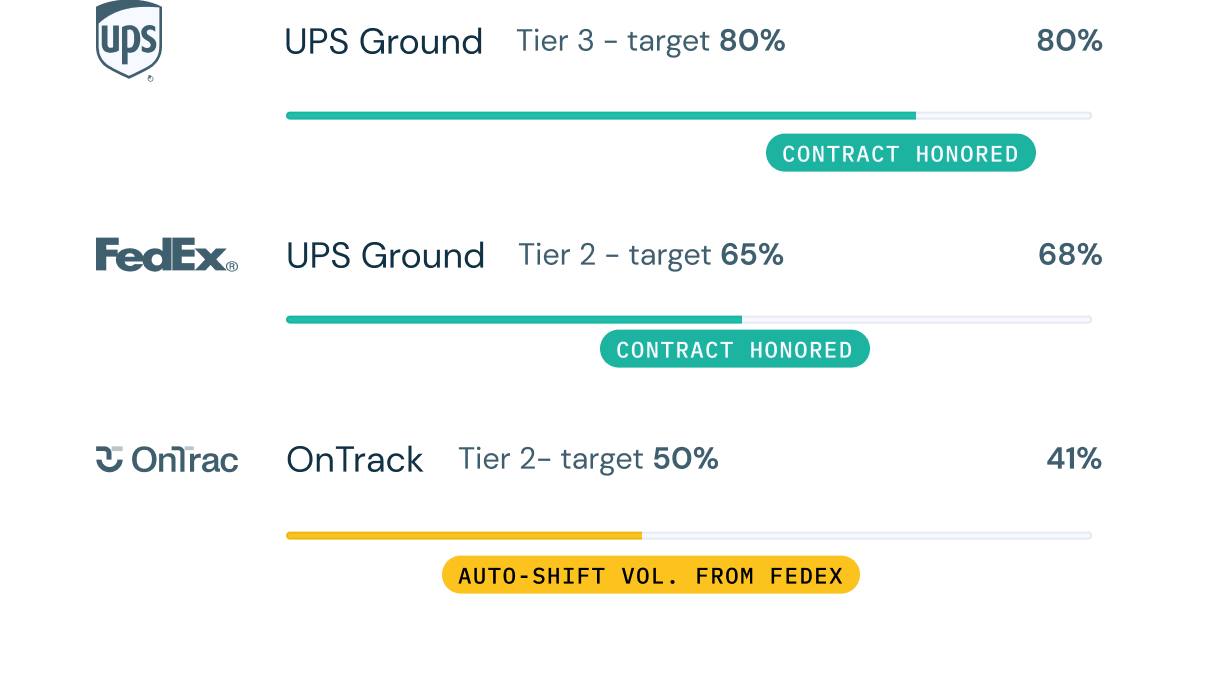
Meet volume commitments with the right mix of shipments
Shipium's Carrier Load Management dynamically balances volume across nationals, regionals, and alternatives, allowing you to intelligently hit commitments and stay inside negotiated rate brackets, not just book the first qualified service.
Establish and manage a multicarrier strategy
Add new carriers in days, not weeks or months. Shipium's 60+ pre-integrated carriers and 200+ service methods turn carrier diversification from an IT project into a configuration change.

04
Ship & Track
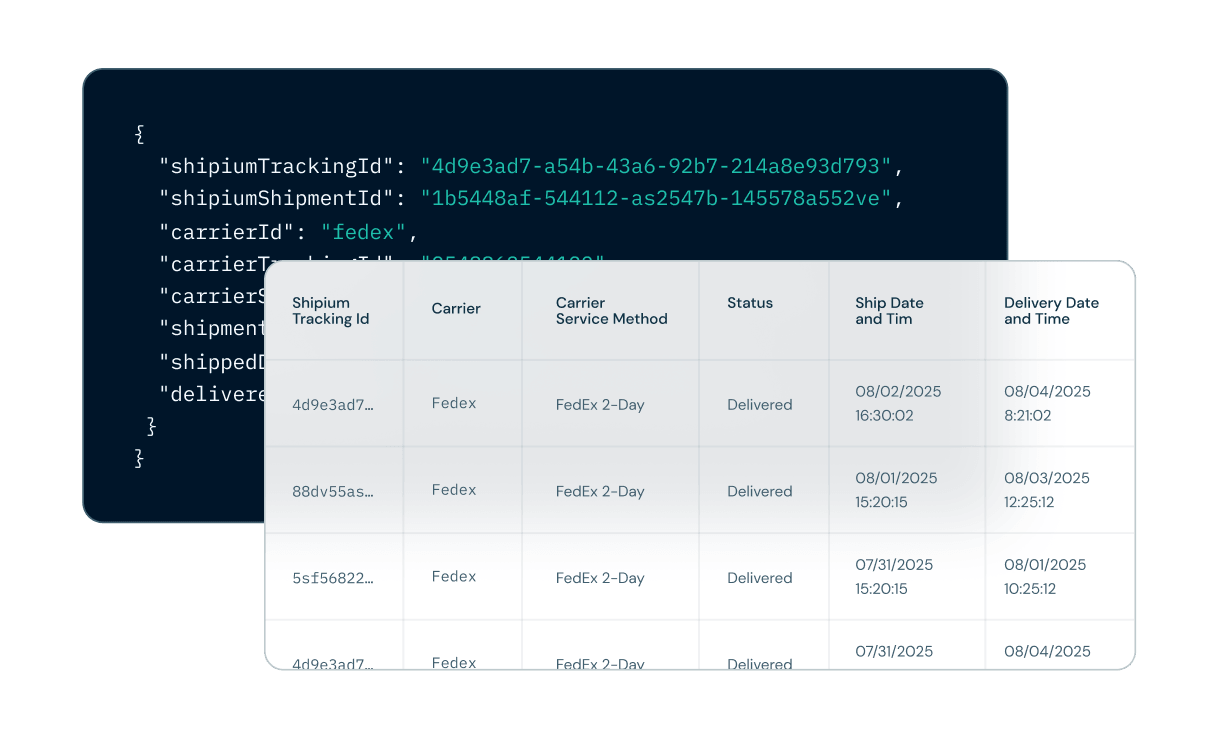
One tracking feed across every carrier
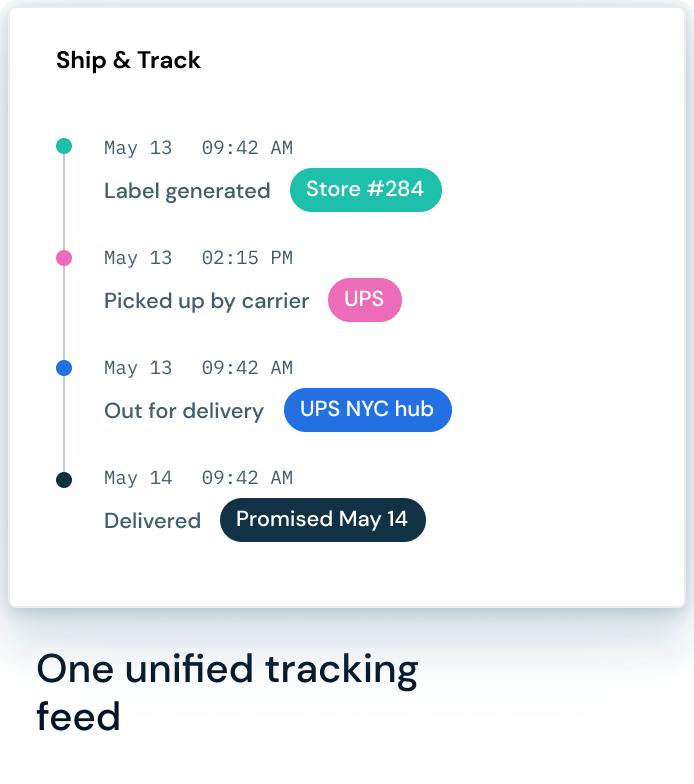
Once a label prints, Shipium standardizes tracking events across every carrier in your network into a single feed. The same data structure is used for every carrier, which means that branded tracking, customer notifications, and post-purchase experiences pull from one source rather than each carrier API.
Who owns this
Digital & ecom
CX
Standardize events across every carrier
Use the same schema for every carrier. Stop building per-carrier event handlers. Stop reconciling API structures. One feed powers every brand surface.
Provide promise transparency
Track each shipment against the date you promised at checkout. Catch slipping deliveries before the customer does. Trigger proactive customer comms when an exception threatens the date to prevent WISMO inquiries and dissatisfaction.

05
Analyze & Iterate
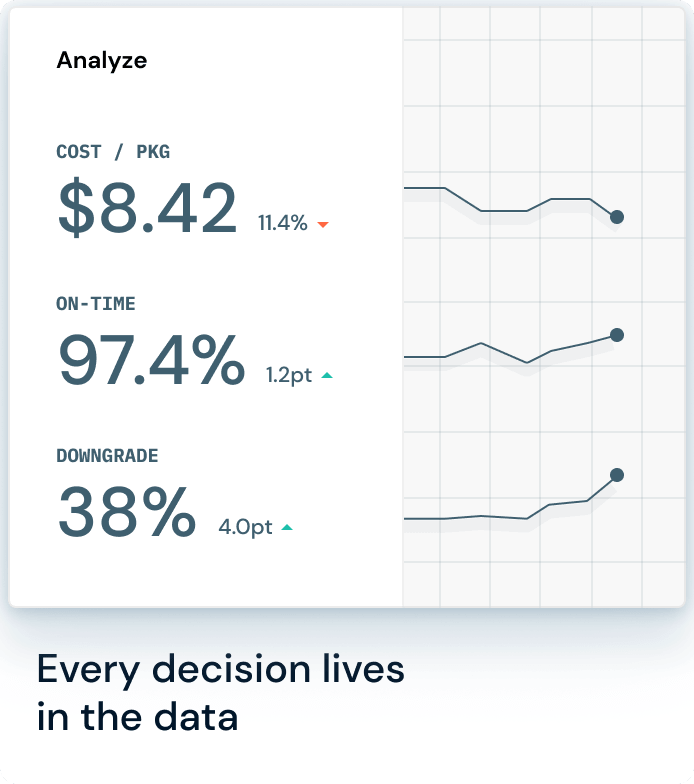
Every decision outcome lives in the data
Data from every shipment feeds into Orca AI Analytics automatically. Evaluate cost-per-package, on-time delivery, and carrier performance. Drill down by node, region, customer segment, or SKU class. Ask questions in plain English to generate visualizations that support deeper analysis.
Who owns this
Logistics & ops
Digital & ecom
Analytics now, not in next month's report
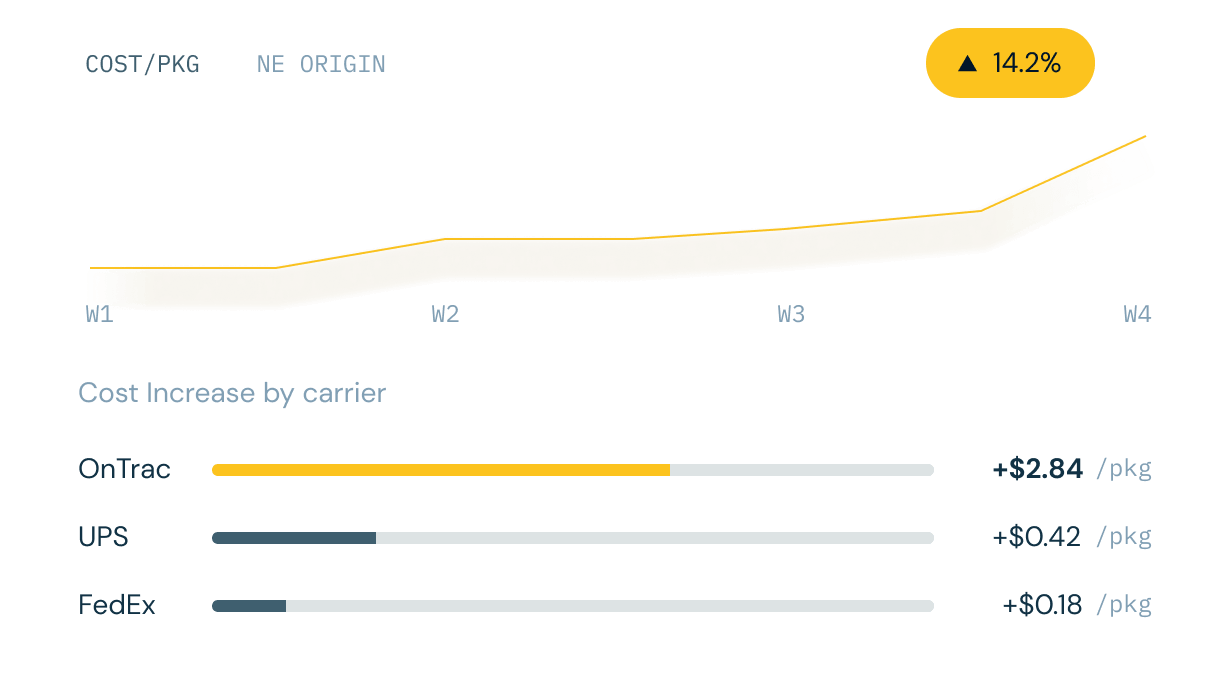
Spot Northeast CPP degrading on a Wednesday morning and adjust your strategy by the afternoon. Catch carrier surcharge drift before it eats at margins. The decisions Shipium makes flow into Orca AI Analytics automatically.

Identify cost reduction by lane, carrier, and origin.
Find exactly what’s driving cost increases, from lanes drifting toward an under-performing carrier to store nodes overpaying for residential surcharges. Your next $1M in shipping savings, made visible.
Get fast answers to your most pressing questions.
Use natural language querying to drill into your data and get to insights faster.
"Can I see a line chart of average cost per package by carrier over the last 6 months?"
"What's our DC-vs-store cost spread?"
"Can I see a line chart of average cost per package by carrier over the last 6 months?"
"What's our DC-vs-store cost spread?"
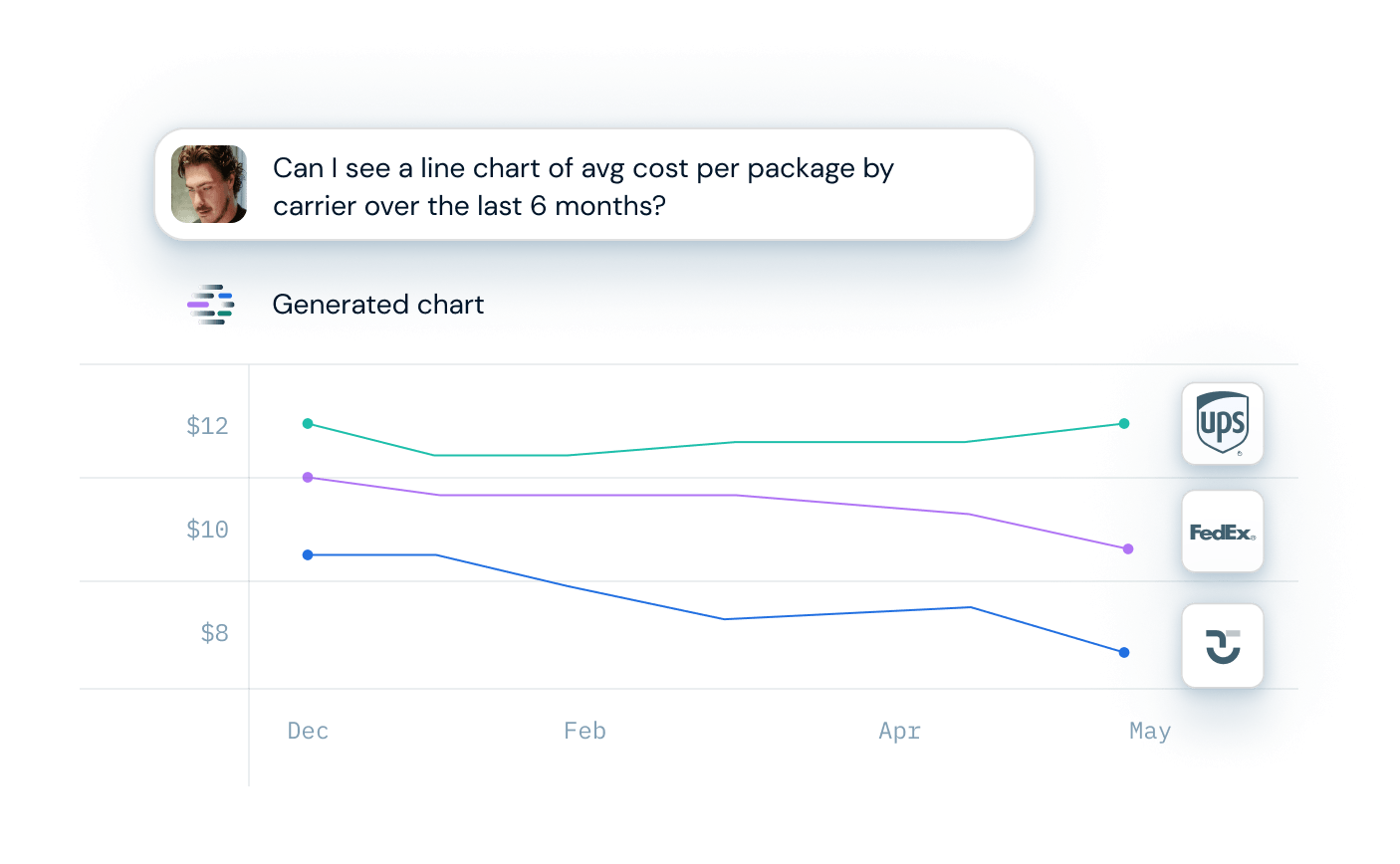
From insight to change, on one platform.
See a problem in Orca, model the fix in Simulation against your actual shipment history, and push the new rule live from the Console. Shipium gives you tools to find and capitalize on opportunities for cost reduction and performance improvement.

Core retail priorities
Retailers use Shipium for cost reduction, CX improvement, and centralized shipping orchestration.
The platform by use case
Explore Shipium's Solutions to see exactly what they do for your business.
Protect margin on every shipment, see what's happening across the network, and both scale clients and your business without scaling headcount.
Strategy & Planning
Customer Experience
Shipping Optimization & Execution
Ops & Financial Controllership
Simulation
Prove the savings before you commit — and before peak.
Model the impact of a new carrier mix, a store-fulfillment rollout, or a network change against your real shipment history before you commit. Used to build the business case for finance. Used in ops to stress-test peak season decisions before Q4.
Orca AI Analytics
Spot margin erosion across your network before it becomes a quarterly problem.
See carrier performance, lane economics, and cost-to-serve in real time vs. a monthly report — the visibility most retailers lack today. Powered by an AI analytics engine purpose-built for shipping data, with natural language querying for custom visualizations and deeper analysis.
Delivery Promise
Show accurate dates at checkout. Reduce post-purchase surprises.
Generate precise delivery date promises at the moment of purchase — on the product page and at checkout — backed by ML models trained on your network's real performance. Better conversion, fewer WISMO contacts, greater customer satisfaction.
Delivery Date Enhancement
Tighter, more accurate delivery dates at every customer touchpoint.
Improve the delivery dates shown to shoppers by combining your OMS inventory data with Shipium's transit prediction models. Upgrade dates from static, carrier-provided ranges to precise commitments.
Shipment Tracking
Real-time visibility into every shipment, across every carrier.
Unify tracking events across every carrier in your network into one standardized feed. Power your post-purchase experience and reduce WISMO contacts with clean, standardized data.
Route Optimization
Pick the right origin and time every shipment accurately.
Select the optimal fulfillment node for every order — warehouse or store — balancing inventory, carrier availability, cost, and SLA. Handles splits, pre-commit routing, and origin re-selection when upstream conditions change.
Rating Engine
Optimize every carrier decision at the moment of shipment.
Score every available service against cost, speed, and SLA at shipment time. Apply your own business rules. Downgrade air to ground whenever SLAs will hold — protecting cost-to-serve without breaking your promise.
Label Engine
Generate compliant labels at scale. Handle peak and offline scenarios.
Print labels for every carrier, every service, and every compliance requirement, including offline scenarios. Built to handle peak volume without falling down.
Carrier Load Management
Balance volume across carriers in real time.
Shift volume across carriers dynamically based on capacity, performance, and contract commitments — including the regionals and alternative carriers you're adding for store fulfillment. Prevent over-allocation to any one carrier, especially during peak. Stay inside your negotiated rate brackets.
Pack Station
Standardize pack workflows across warehouses and stores.
A pack station UI that works across warehouses, nodes, and store setups. Drive consistent pack quality, capture accurate dims and weights at source, and reduce downstream billing disputes.
Ship-from-Store
Turn stores into fulfillment nodes without a rebuild.
Light up store fulfillment with the same rules, rate shopping, and label engine your warehouses use. Orchestrate the store → carrier handoff without bolting on a separate, disconnected system.
Address Validation
Catch bad addresses before they become exception costs.
Avoid address correction surcharges, failed deliveries, and return-to-sender fees — which erode margin, damage the customer experience, and compound across volume.
Dropshipping
Run vendor-fulfilled orders through the same shipping system.
Extend Shipium's rating, labeling, and tracking to dropship vendors so vendor-fulfilled orders hit the same SLAs, cost thresholds, and customer promise as your own shipments.
Mode Optimization
Pick parcel vs. LTL automatically.
Evaluate whether parcel or LTL delivers the best cost-to-SLA outcome and route accordingly across high-volume lanes.
Zone Skipping
Move volume injected closer to destination.
Consolidate shipments destined for the same region, line-haul them to an injection point, and hand off to the carrier for final-mile — collapsing zones and cutting cost on high-volume lanes.
Packaging Optimization
Reduce DIM weight charges. Standardize packaging by SKU.
Recommend the right box for every order based on SKU dimensions, shipment composition, and carrier DIM rules. Cut dimensional weight charges and reduce packaging waste at the same time.
International Shipping
Cross-border shipping built into the same platform.
Handle international shipments (Canada and LATAM) through the same rules engine and carrier network you use for domestic.
Billing Management
Allocate shipping cost accurately across brands and channels.
Generate invoices and cost allocations from real shipment data — with fully-loaded costs and accessorial handling already applied. Tie shipping spend back to finance, by brand and channel.
Invoice Management
Reconcile carrier invoices against expected charges.
Ingest carrier invoices via API, EDI, or file transfer. Match line items against shipment-time rates. Flag discrepancies down to the accessorial. Recover surcharge overcharges that today slip through and erode margin.
Digital Twin
A live model of your network.
Every shipment, carrier decision, rate, and outcome in your network — continuously modeled. Digital Twins power ML optimization, make Simulation possible, and ensure Orca AI Analytics are accurate and actionable.
Rules Engine
Configure global and brand-specific logic without an IT ticket.
A universal rules engine that sits under every shipping decision — carrier selection, packaging, labeling, routing. Your supply chain team changes logic from the console — no service orders, no waiting on internal IT.
Console
Centralized control across every shipping decision.
One interface to manage brands, carriers, rules, rates, and analytics across warehouse and store fulfillment. Replaces the disconnected mix of carrier portals, rate cards, store shipping tools, and WMS shipping modules retailers stitch together today.
Carrier Network
60+ pre-integrated carriers. 200+ service methods.
Nationals, regionals, internationals, and alternatives — all pre-integrated and ready to configure. When you need to add an alternative carrier for store fulfillment or a new regional, you add it in days, not weeks.
Integration Framework
Get the most from your current stack.
Configuration-ready integration frameworks with the WMS, OMS, and ERP systems retailers depend on — Manhattan, Blue Yonder, Oracle, Deposco, Logiwa, and more. No integration issues with the systems you already run.
ML Models
The intelligence layer under every Shipium decision.
Purpose-built ML models trained on the industry's largest shipping dataset — powering accurate delivery promises, optimal carrier selection, and the predictive analytics your team runs every day.
Built for your most valuable use cases
See how Shipium
handles your use cases.
Lighting up store fulfillment
Migrating to a modern WMS or OMS
Evaluating the carrier mix
Sharpening the delivery promise
Planning for peak season
Add your stores to your fulfillment network.
Without Shipium
Leadership wants ship-from-store live in time for peak. Stores have inventory and proximity to customers, but the shipping tech in the DC doesn't extend to the store. You stand up a separate solution for store fulfillment with its own carrier contracts, its own rules, its own rate cards, its own analytics. Now you have two systems, two rate sheets, two sources of truth on cost, and no way to tell whether the store or the DC should fulfill any given order. Performance varies wildly by location, and visibility is patchwork at best.
With Shipium
Stores plug into the same shipping platform your DCs use. Same carrier contracts, rules, rate shop logic, and analytics. Route Optimization decides whether a store or DC should fulfill an order, based on inventory, cost, and SLA.
Outcome
One shipping platform across every node and fulfillment strategy.
Your WMS is moving to the cloud. Your shipping layer should come with it.
Without Shipium
Let’s say you're moving to Manhattan Active (or Blue Yonder Cloud, or Oracle Cloud). The migration is a multi-quarter project, and quietly, your shipping tech doesn't support the new system. The legacy WMS shipping module or parcel system won't travel. Carrier contracts, rules, and rate logic need to be rebuilt.
With Shipium
Shipium's integration framework supports Manhattan Active, Blue Yonder Cloud, Oracle Cloud, SAP, Deposco, Logiwa, and the rest of the modern stack. Your shipping configuration lives in Shipium, not in the legacy WMS. Shipping technology supports modernization rather than holding it up.
Outcome
Faster, more seamless technology modernization.
Pick the right carrier, the right service, and the right mix at scale.
Without Shipium
Your shipping costs are climbing faster than your margins. You're single-threaded with one national carrier, paying for air services on orders where ground would have arrived on time, and watching surcharges compound across every shipment. Adding a regional or alternative carrier (OnTrac, Veho, Amazon Shipping, DoorDash, Uber) means weeks or months of IT work. Even when carriers are live, your shipping system books the first qualified service rather than the optimal one, consistently leaving savings are sitting on the table.
With Shipium
Rating Engine scores every available service against cost, speed, and the customer's SLA at the moment of shipment. Whenever ground will arrive on time, ground gets booked. Carrier Load Management dynamically balances volume across nationals, regionals, and alternatives to hit contracted commitments. New carriers are added through the Console in days. Orca Analytics shows you which carriers and lanes are actually pulling their weight to inform your next RFP.
Outcome
~12% average shipping cost reduction across Shipium customers.
The promise you make is the experience you deliver.
Without Shipium
Your PDP shows "arrives in 5–7 business days" because that's what your carrier's static table says. Some customers see promises that are too aggressive and end up disappointed. Others see promises that are too conservative and abandon for a faster competitor. Your team maintains delivery date tables in a spreadsheet, updating manually when carriers change cutoffs or transit times. Returns and complaints spike when the gap between promise and reality widens.
With Shipium
Delivery Promise generates accurate, segmentable dates at PDP, cart, and checkout, backed by ML models trained on your network's real transit performance. Tune by region, customer tier, node, or product. Additionally, you can simulate any change to your promise strategy before you push it live.
Outcome
Higher conversion, tighter dates, stronger customer experience.
Know what peak will look like before peak actually hits.
Without Shipium
As your team prepares for peak, you’re working through a range of scenarios like estimating carrier capacity, modeling service-level impacts, and planning for contingencies. But if much of that analysis lives in spreadsheets built off last year's numbers, you’re bound to be reacting to unexpected events when peak hits.
With Shipium
Simulation models peak against your current state to project where service levels will degrade, where margin will compress, and which lanes are most at risk. Run what-if scenarios on alternate carrier allocations, routing decisions, and injection strategies. When peak hits, you've already stress-tested the decisions you'll need to make.
Outcome
Peak visibility ahead of time, not after the fact.
Built to work with Retailers' existing technology


Recognized as a leader and Cool Vendor in the Multi Carrier Parcel Management Solution space by analyst firm Gartner


UPS Ready 2025
Impact POTY
Impact POTY

FedEx
Compatible
Compatible

DHLeC
Certified Partner
Certified Partner

USPS Direct
Partner
Partner
Customer Success Story
How leading retail are growing their business with Shipium.
See how leading retail use Shipium to protect margin, gain visibility, and scale operations.
Atomix turns shipping from complexity into benefits for its customers
Shipium's AI and ML models within the platform are great. I love that my team can rely on these models self-adjusting to changes in the world happening around us, and we never have to think about it." — Andrew Webber, Technical Founder & CTO, Atomix

DCL launches industry-defining SelectShip, powered by Shipium
Shipium's platform was one of the key areas we saw investing in AI and Machine Learning could help our customers in a practical way.
